About This Site
This site provides bibliographical information compiled and organized based on a comprehensive survey of the Jiaxing Edition Buddhist Canon held by Yūren-ja Temple (formerly the Hōon-zō of Zōjō-ji Temple). As of May 2025, images of 1,617 Buddhist scriptures out of the 1,675 titles included in the Main Collection are available for viewing. Images of the Supplement and Second Supplement will be successively released in the future.
For an overview of the Jiaxing edition of the Buddhist Canon preserved at Yūren-ja Temple, please refer to this section.
For information on how to use the database, please refer to “How to Use the Database” and “Description of Fields”.
This database has been developed with support from JSPS KAKENHI Grant Numbers 18K00073, 21H04345, and 25H00464.
The research members of this project are as follows.
Principal Investigator
- Yoshimitsu Aitani (Research Fellow, Toyo Bunko)
Co-Investigators
- Yoshiyuki Aihara (Research Fellow, Toyo Bunko)
- Satoru Nakamura (Assistant Professor, Historiographical Institute, The University of Tokyo)
- Tensho Miyazaki (Associate Professor, Institute for Buddhist Cultural Studies, Tsurumi University)
- Nobuko Shimizu (Research Fellow, Toyo Bunko)
We would like to express our deepest gratitude to Chief Priest Aoki Shōken and Deputy Chief Priest Hosokawa Akihiro of Yūren-ja Temple for their generous cooperation in the comprehensive survey and digital photography of the collection.
May 24, 2025
Yoshimitsu Aitani
Overview of the Jiaxing Edition Buddhist Canon held by Yūren-ja Temple
- This catalog lists the Jiaxing Edition Buddhist Canon (hereafter “Jiaxing edition”) held by Yūren-ja Temple (formerly the Hōon-zō of Zōjō-ji Temple). Among the Buddhist canons printed during the Ming dynasty, the official southern and northern editions are known, but they were scarcely transmitted to Japan. The Jiaxing edition was printed during the Wanli era (1573–1620) under the supervision of masters Daguan zhenke and Mizang Daokai at temples such as Jing-shan in Yuhang County, Hangzhou Prefecture, Jiangnan, and was bound and distributed at Lengyan Temple in Xiushui County, Jiaxing Prefecture. Because it was bound in codex format and was much easier to obtain than the southern and northern editions, it played a significant role in the dissemination of Buddhism and was reportedly imported into Japan in forty to fifty complete sets.
- Although commonly referred to as the “Ming edition (明版)” or “Ming print (明本),” the Jiaxing edition merely began publication during the Ming dynasty and continued to be printed into the Qing period. The Yūren-ja copy contains numerous Buddhist texts bearing colophons dated to the Kangxi era (1662–1722), indicating that it was printed in the Qing dynasty.
The catalog consists of three parts: the Main Collection (正藏), the Supplement (續藏), and the Second Supplement (又續藏).
The Main Collection includes the four fascicles of the Daming Sanzang Shengjiao Mulu (corresponding to the Northern edition’s Main Collection), one fascicle of the Daming Xuruzang Zhuji (corresponding to the Northern Supplement), and one fascicle of the Beizang Qian Nanzang Hanhao Fu, totaling six fascicles. It is believed that printing began around 1589 (the seventeenth year of the Wanli era) and was completed around 1642 (the fifteenth year of the Chongzhen era).
The Supplement was added in 1666 (the fifth year of the Kangxi era), and the Second Supplement in 1676 (the fifteenth year of the Kangxi era). However, some colophons and prefaces dated later than these years are occasionally included. The contents and arrangement of the texts vary according to the printing period.
*The above description is reprinted from the “Editorial Notes” (pp. 1–3) of Yoshimitsu Aitani (ed.), Catalog of the Jiaxing Edition Buddhist Canon held by Yūren-ja Temple (Formerly the Hōon-zō of Zōjō-ji Temple) (Yūren-ja, 2012).
How to Use the Database
This database provides three main search methods for users.
Search by Case and Volume
You can browse the Buddhist texts in the Yūren-ja collection by the physical units of case and volume.

[How to Use]
Select the desired case from the “List of Cases.” The “List of Volumes” will display all the volumes contained in that case. Multiple volumes can be selected at the same time.

To view bibliographical information, select the desired volume from the “List of Volumes” and click “View Bibliography”.

The “Detailed Catalog” entries contained in that volume will be displayed.
To clear your selection, click “Reset” in the “List of Volumes”.

To view images, click the blue “View Images” button to the right of the desired volume in the “List of Volumes”.

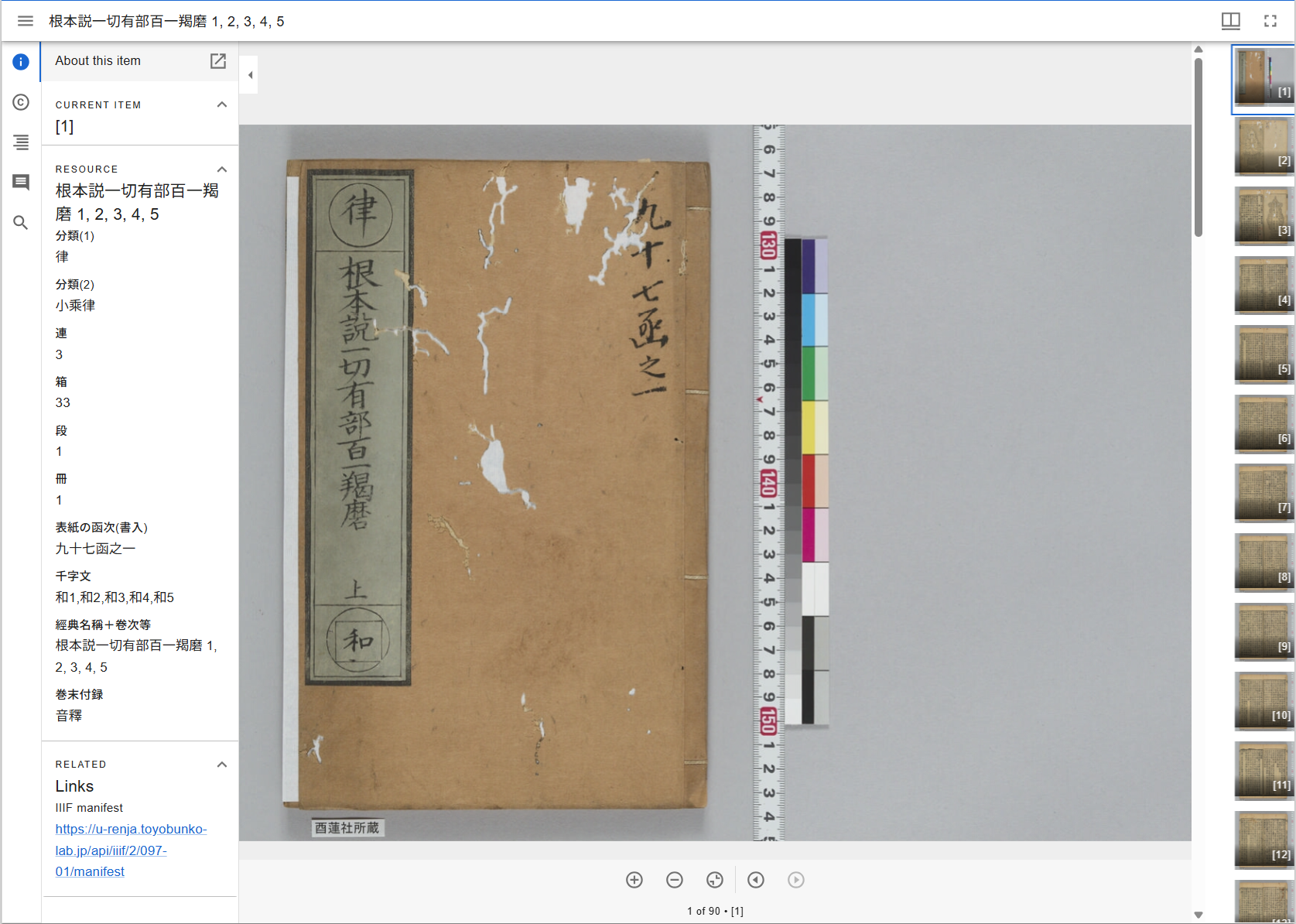
The image of the selected volume will open.
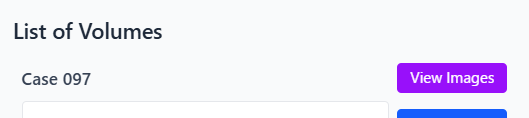
To view all the images contained in a case, click the purple “View Images” button at the upper right.
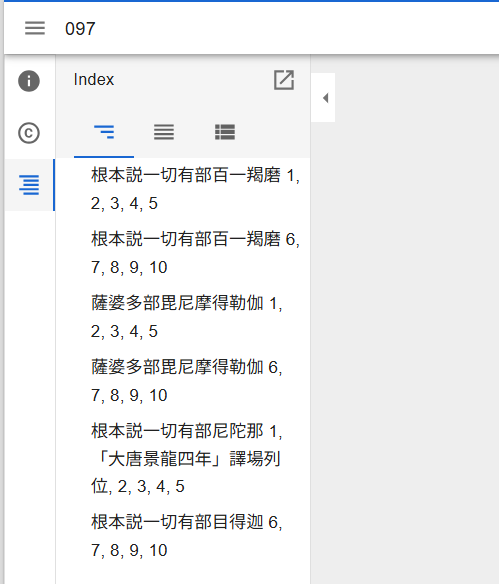
Click the desired section from “Collections”.
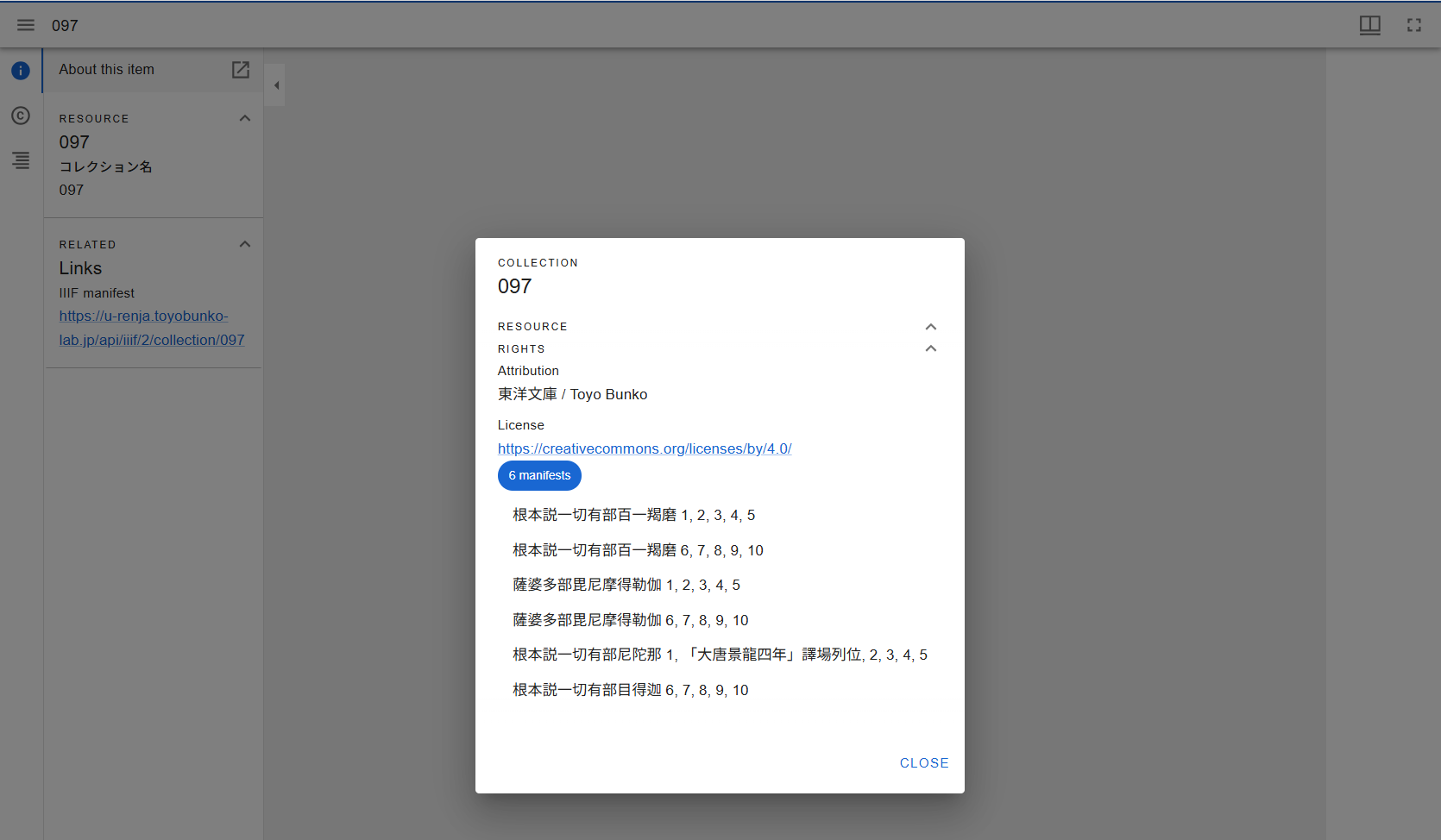
You can also select from the “Index” on the left-hand side.
Search by Title Catalog
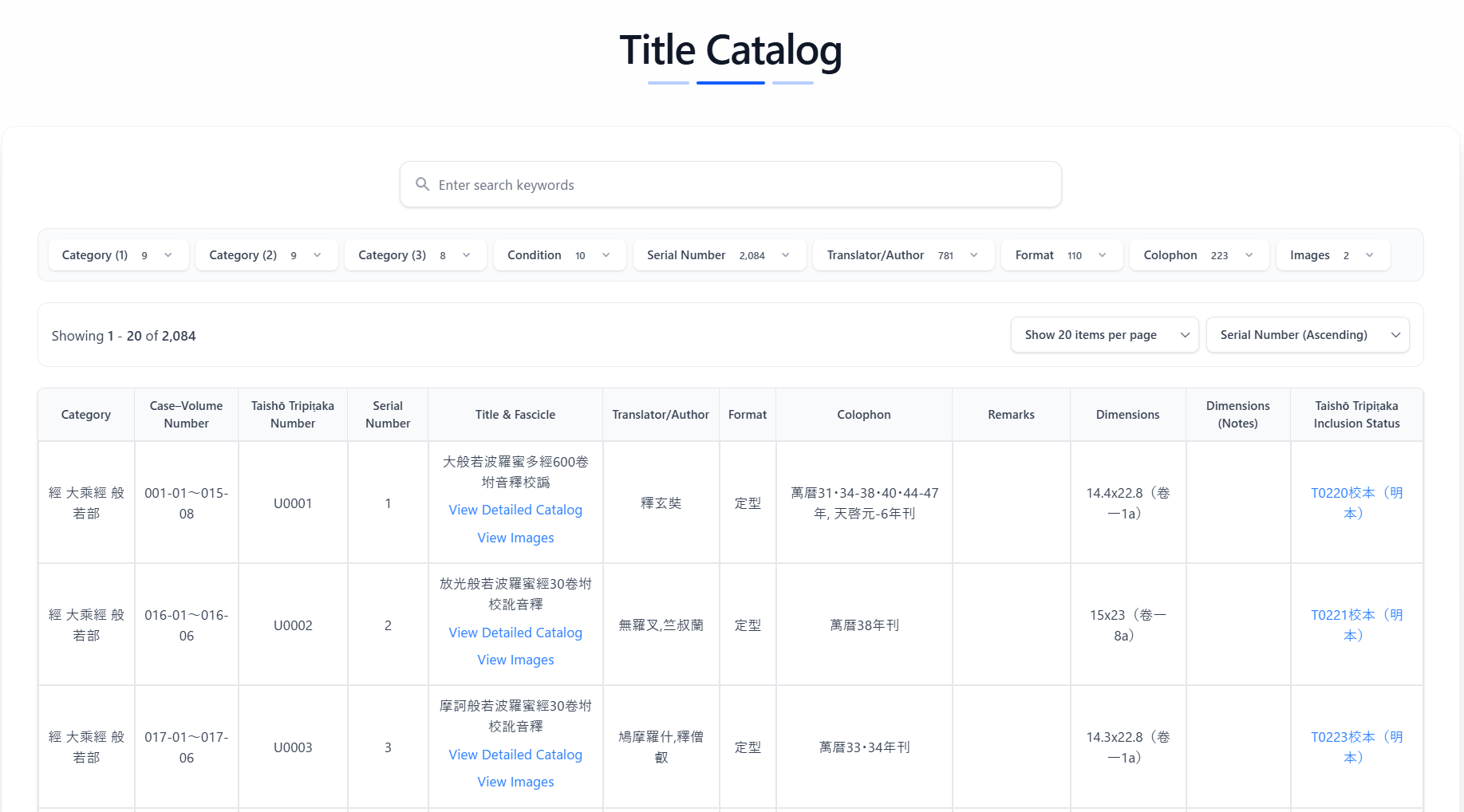
You can search for the Buddhist texts in the Yūren-ja collection by title. Basic bibliographical information and their inclusion status in the Taishō Tripiṭaka can also be checked.
[How to Use]
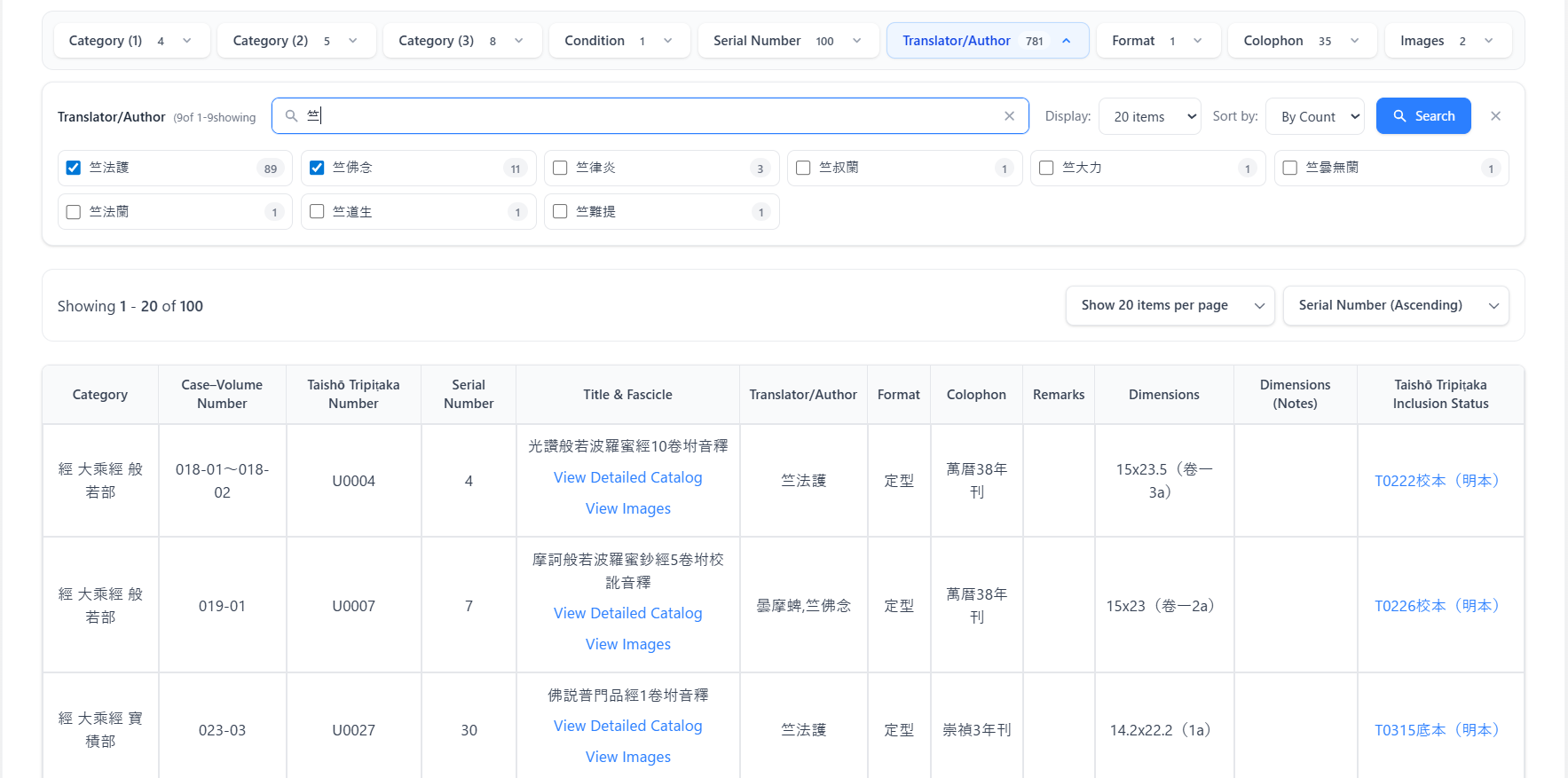
Enter the desired keyword in the search box. Variant characters can also be used for searching.

Example of search results:
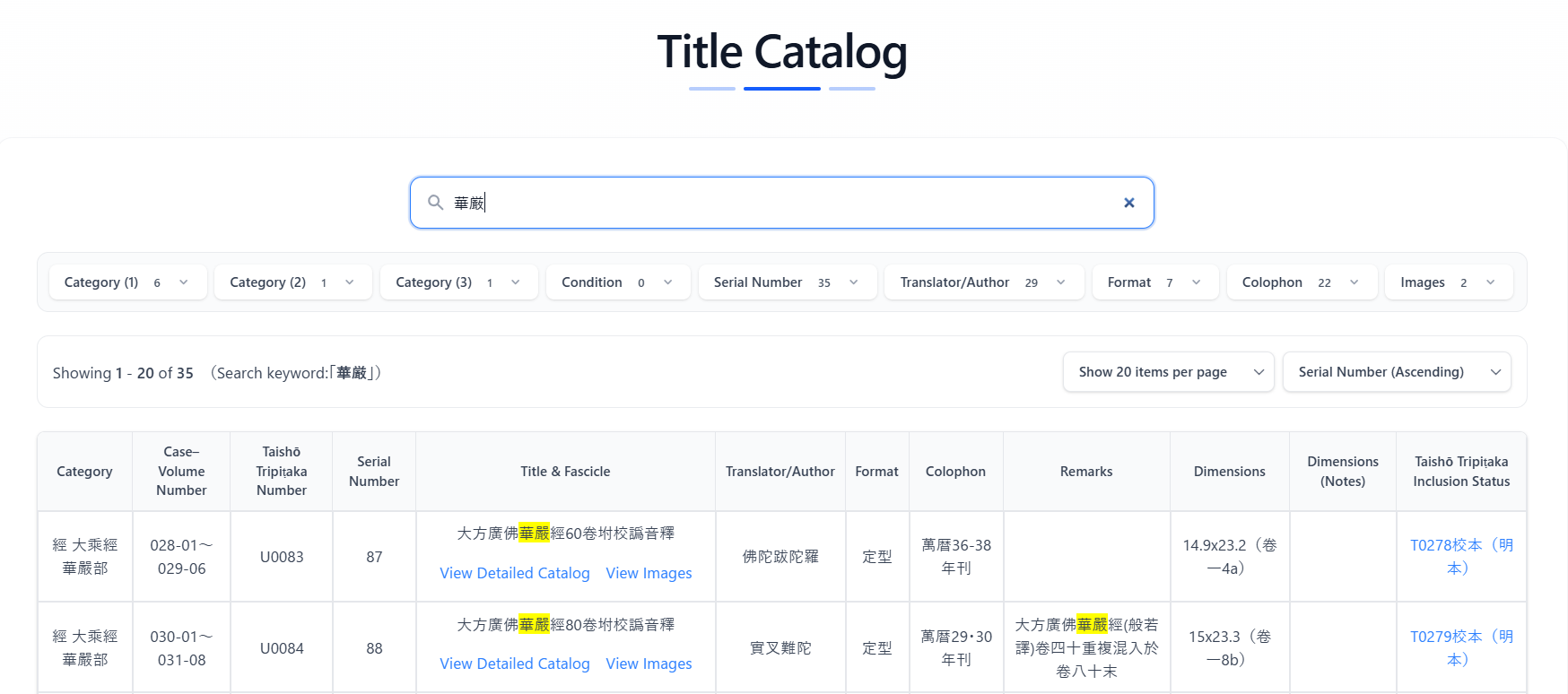
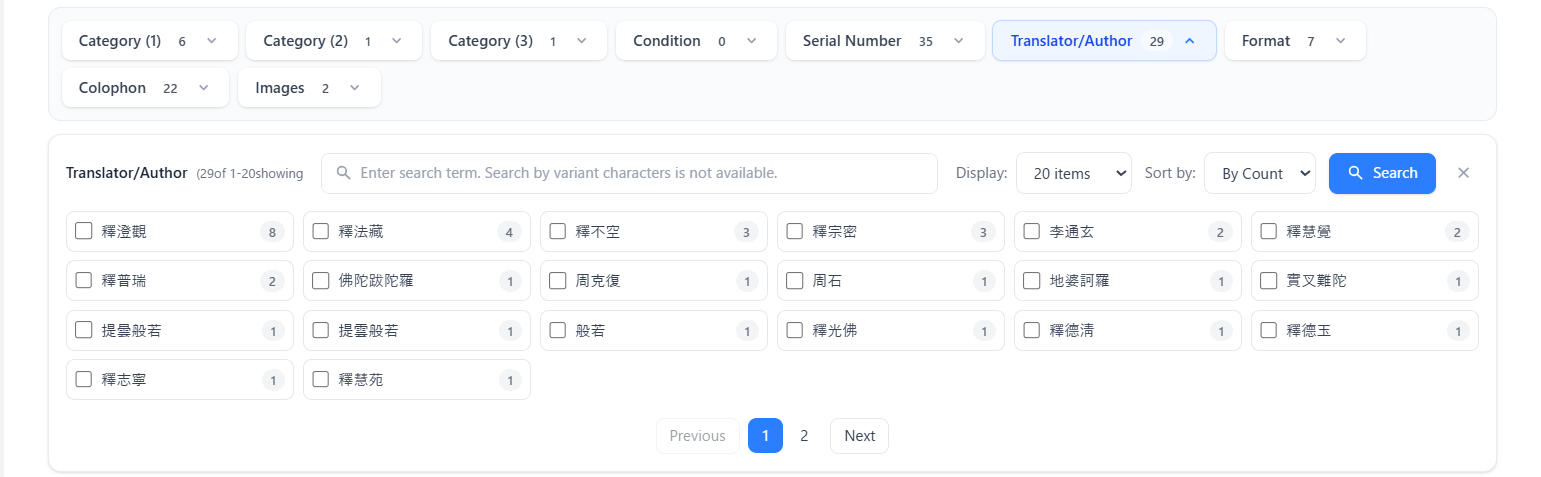
You can narrow down the results using facets. Please note that variant characters cannot be used in the facet search box.
Combined searches can be performed by entering text in the search box and selecting multiple facets. After entering or selecting your criteria, click “Search”.
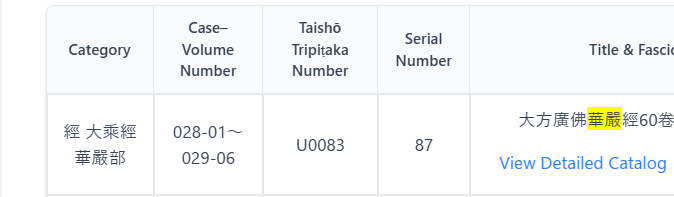
To view bibliographical information by fascicle, click “View Detailed Catalog”.
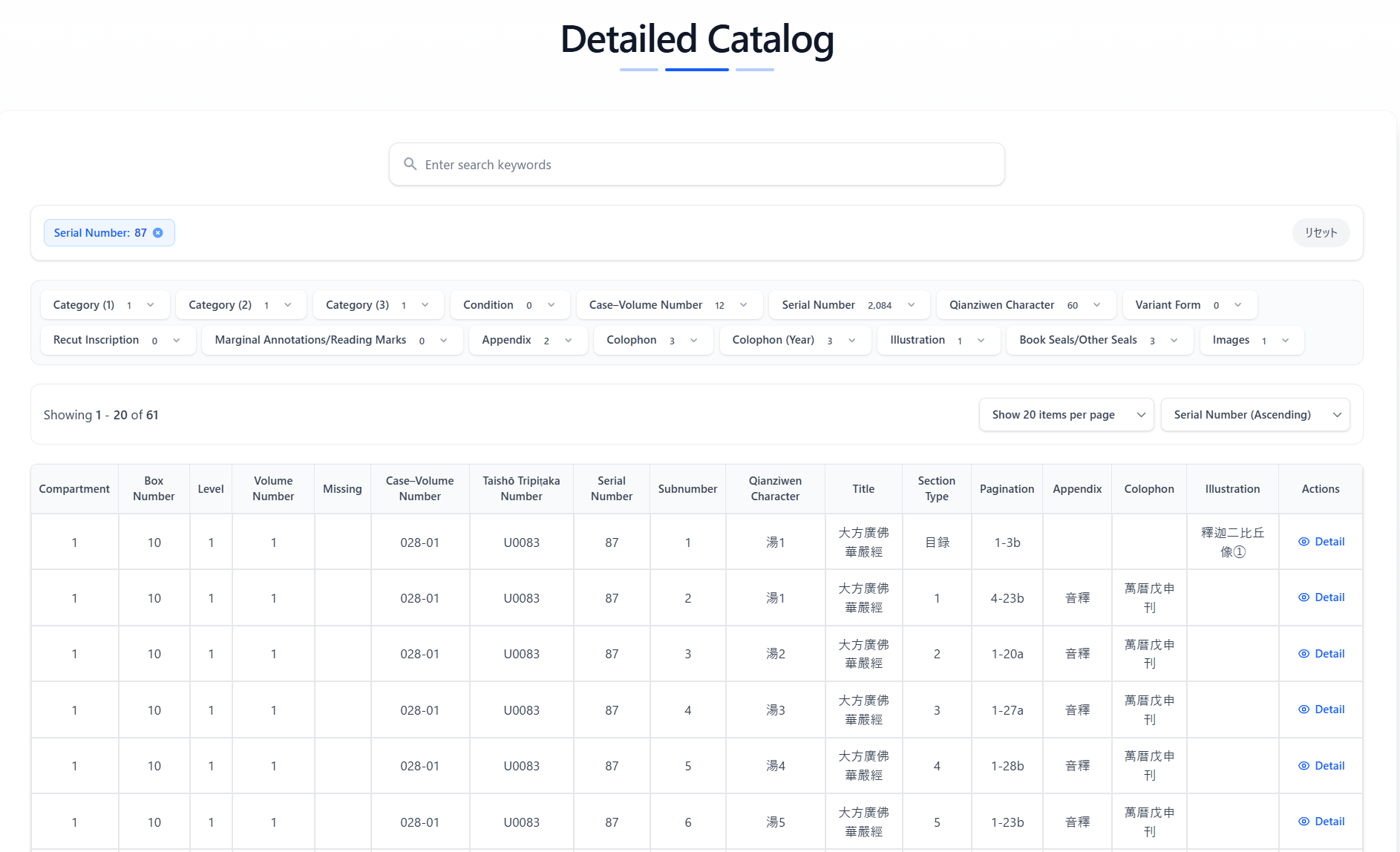
Example of a detailed catalog:
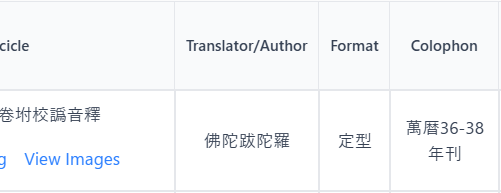
To view images, click “View Images”.
A list of images by volume will appear. Click the desired part to open the image.
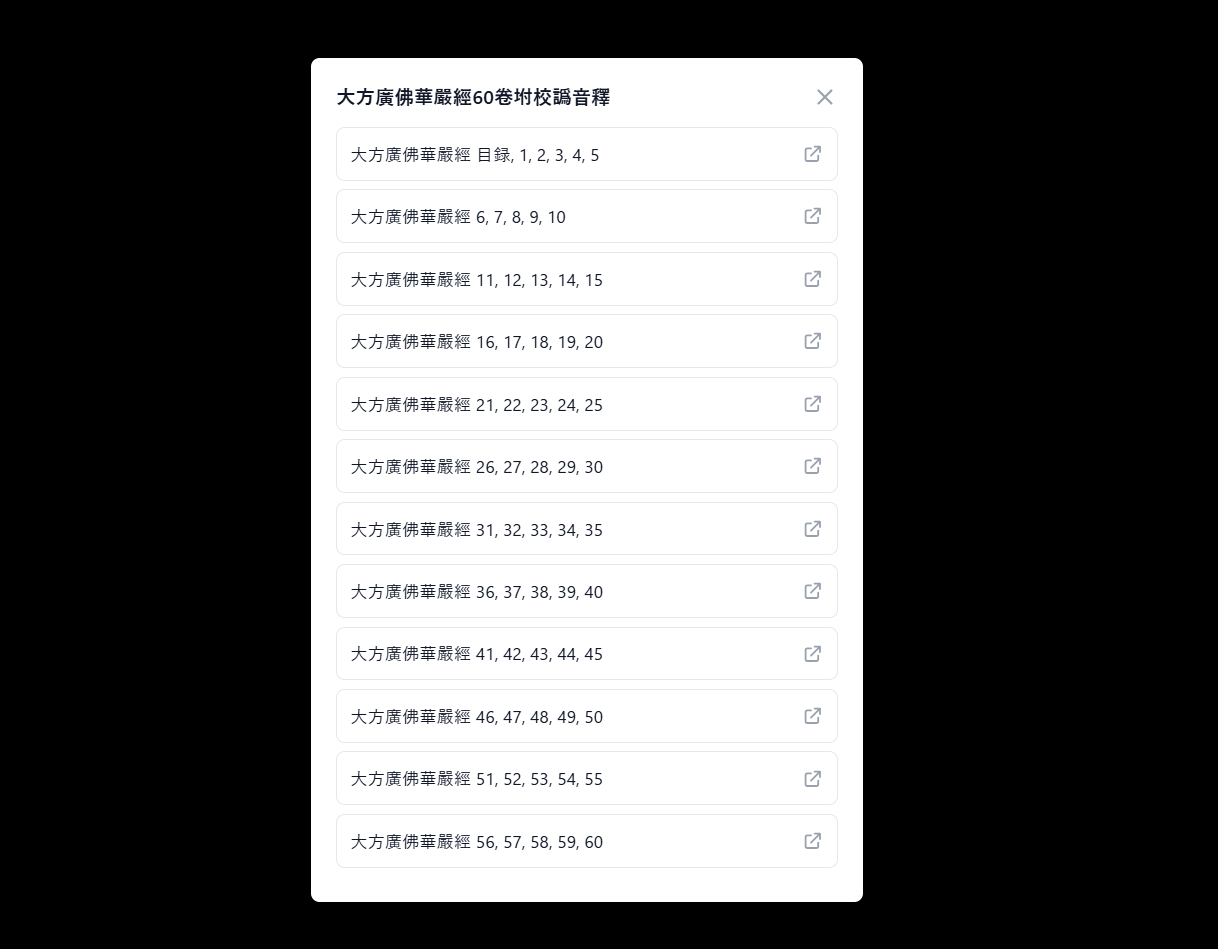
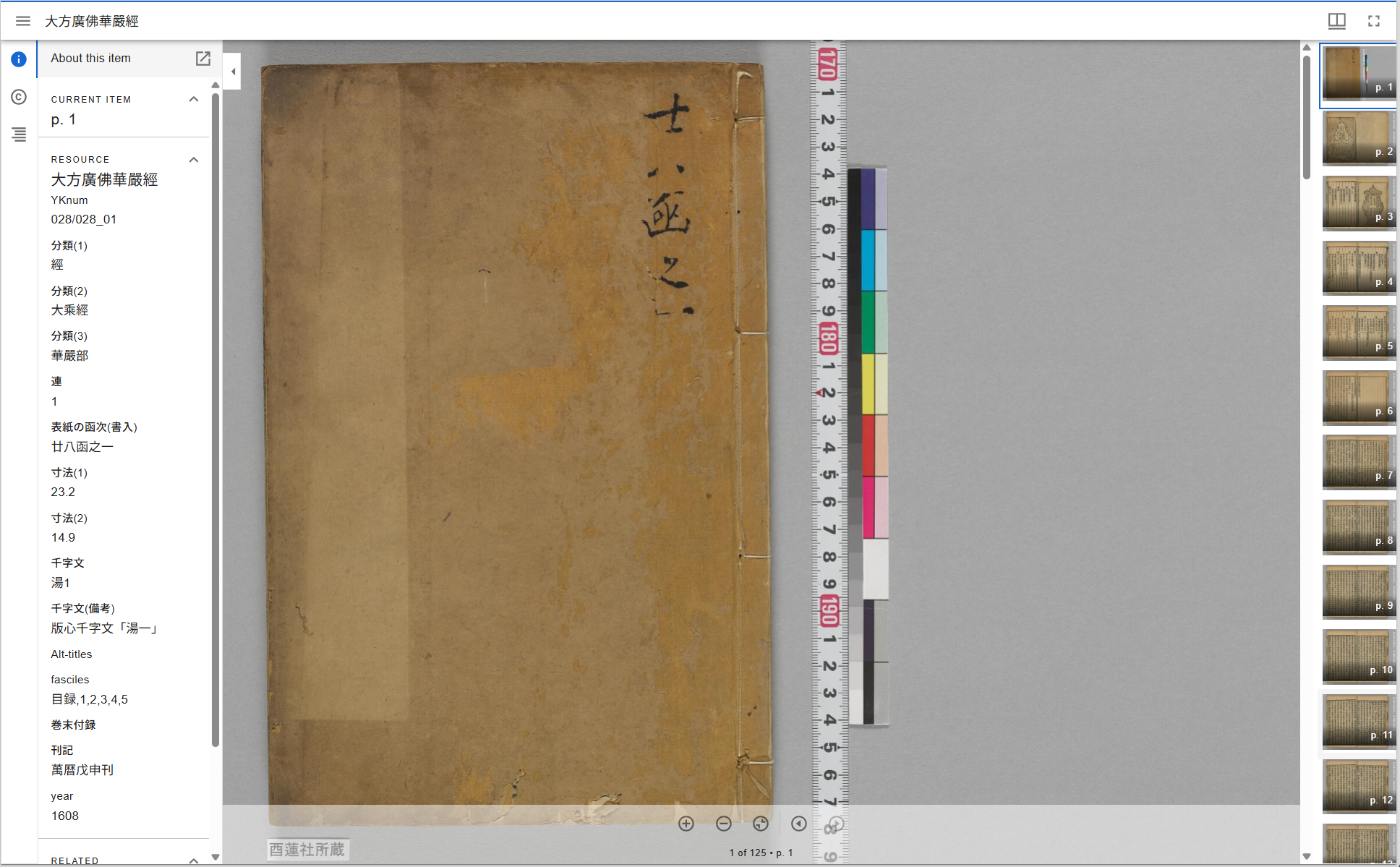
Example of an image:
By clicking the “Taishō Tripiṭaka Inclusion Status” column, the corresponding text page in the Taishō Tripiṭaka Base and Collation Texts Database will open.
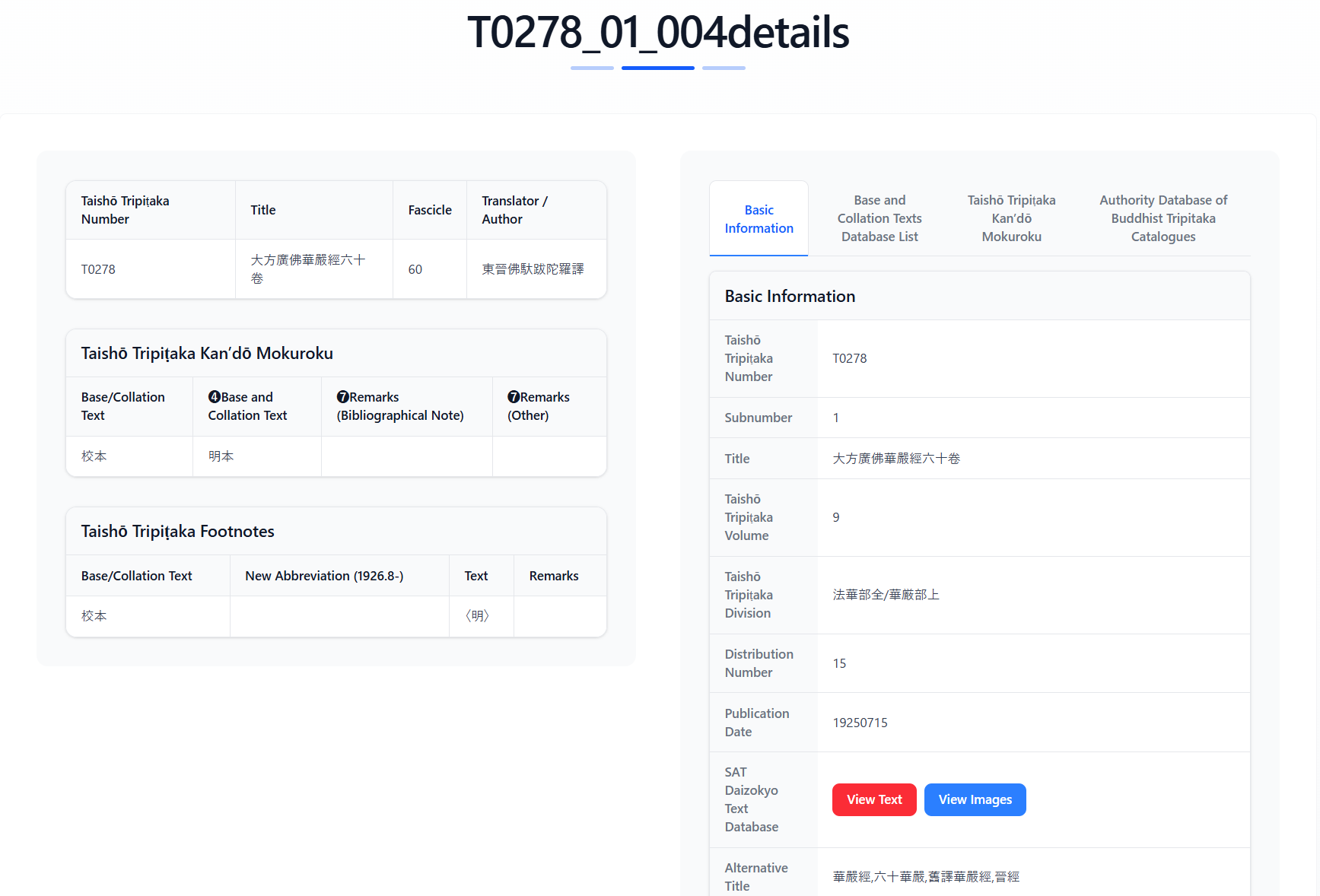
For how to use the “Taishō Tripiṭaka Base and Collation Texts Database,” please refer to this page.
Search by Detailed Catalog
You can search the Buddhist texts in the Yūren-ja collection by fascicle.
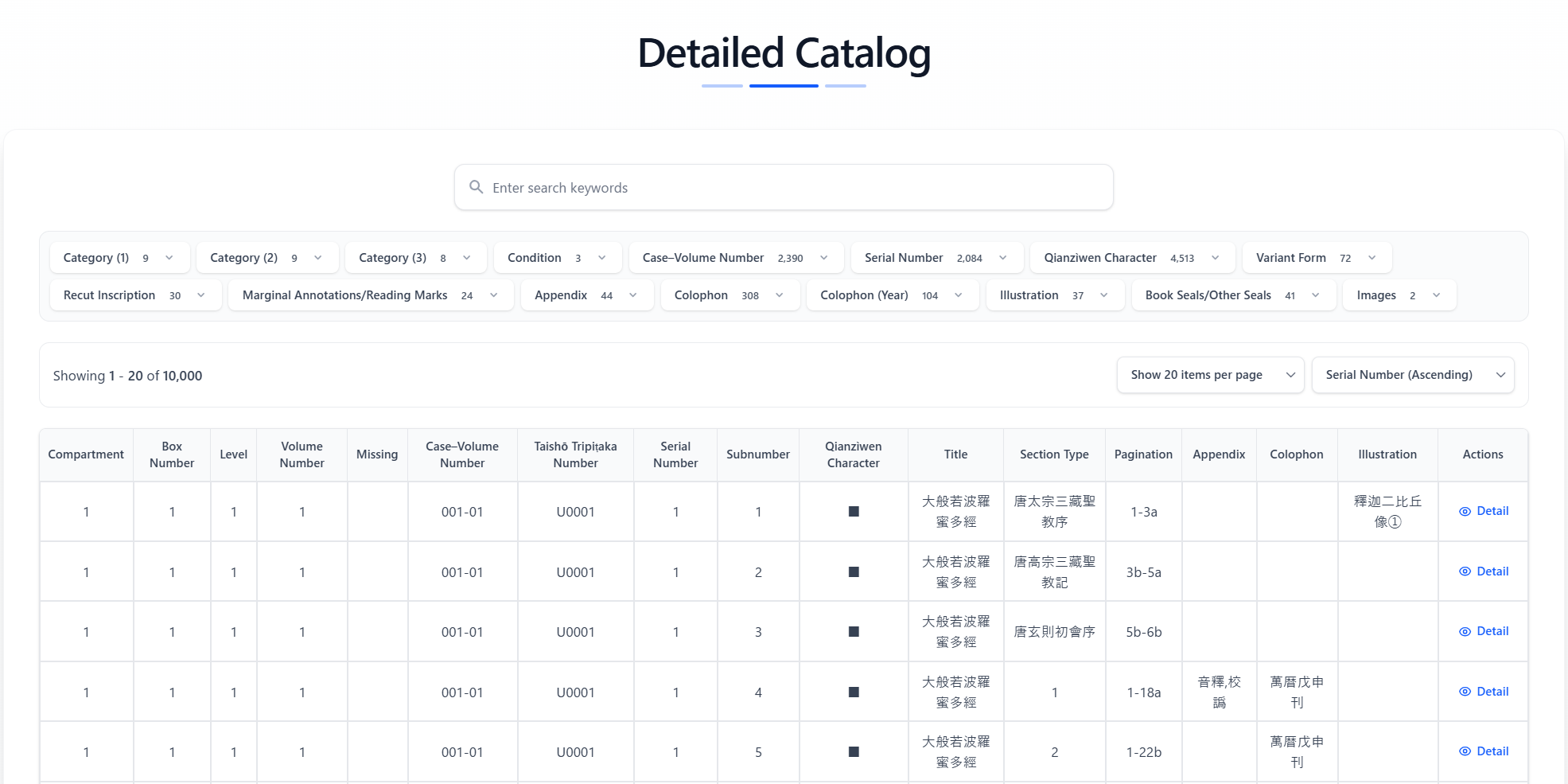
[How to Use]
Enter the desired keyword in the search box. Variant characters can also be used for searching.

Example of search results:
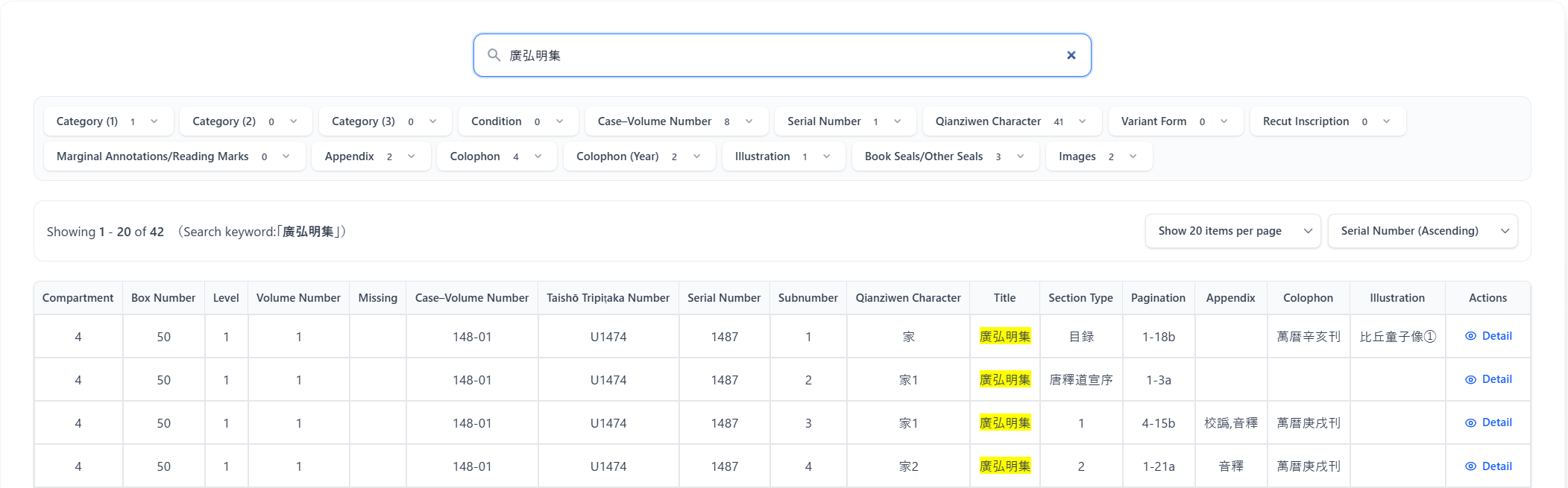
You can narrow down the results using facets. Please note that variant characters cannot be used in the facet search box.
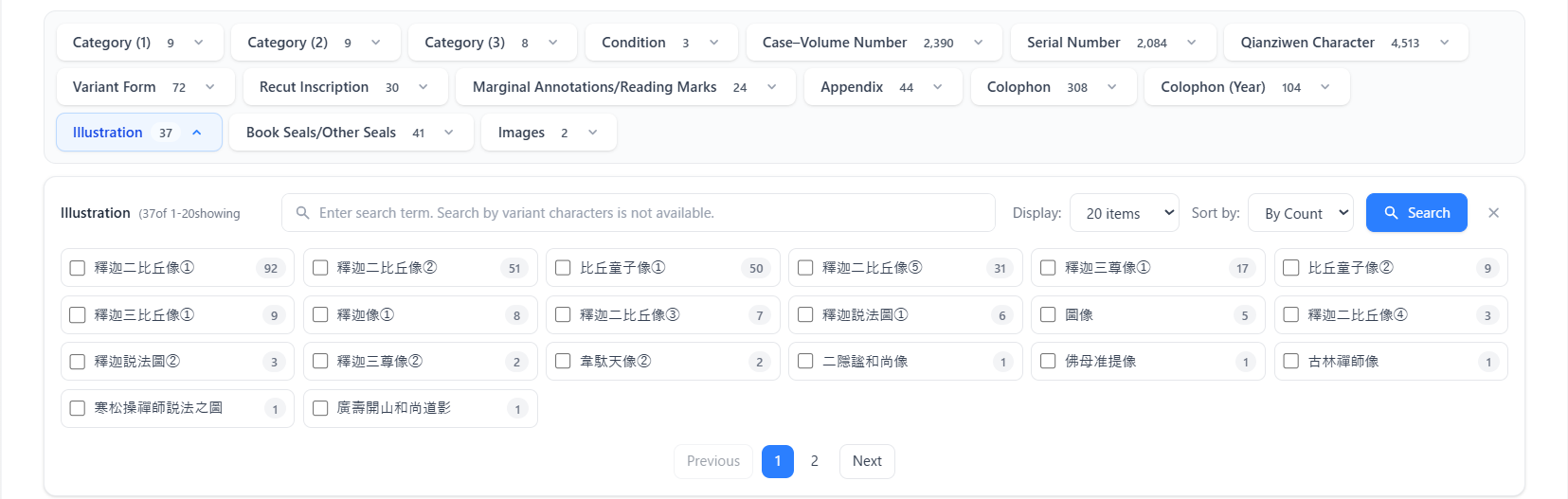
You can perform a combined search by entering text in the search box and selecting multiple facets. After setting your conditions, click “Search.”

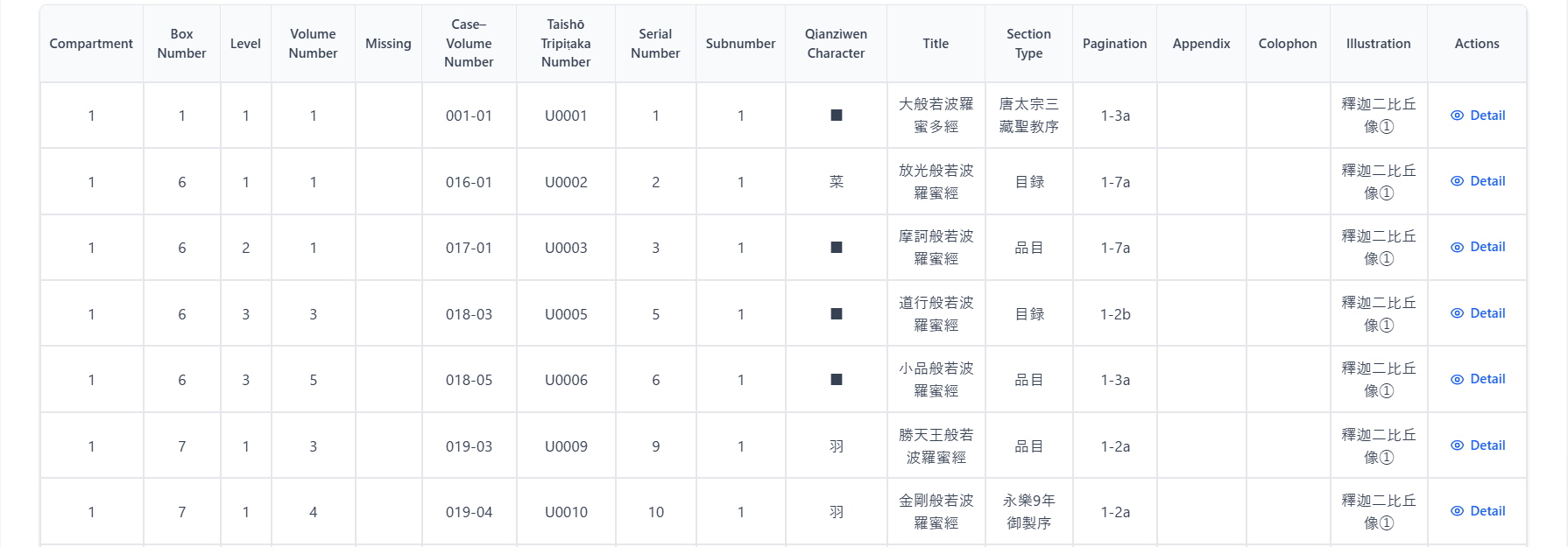
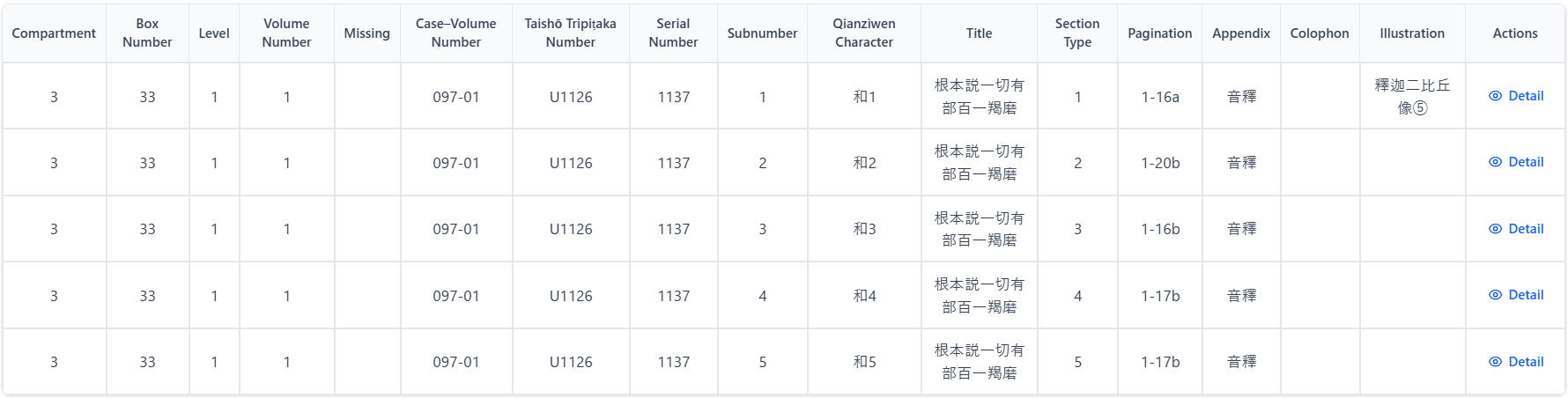
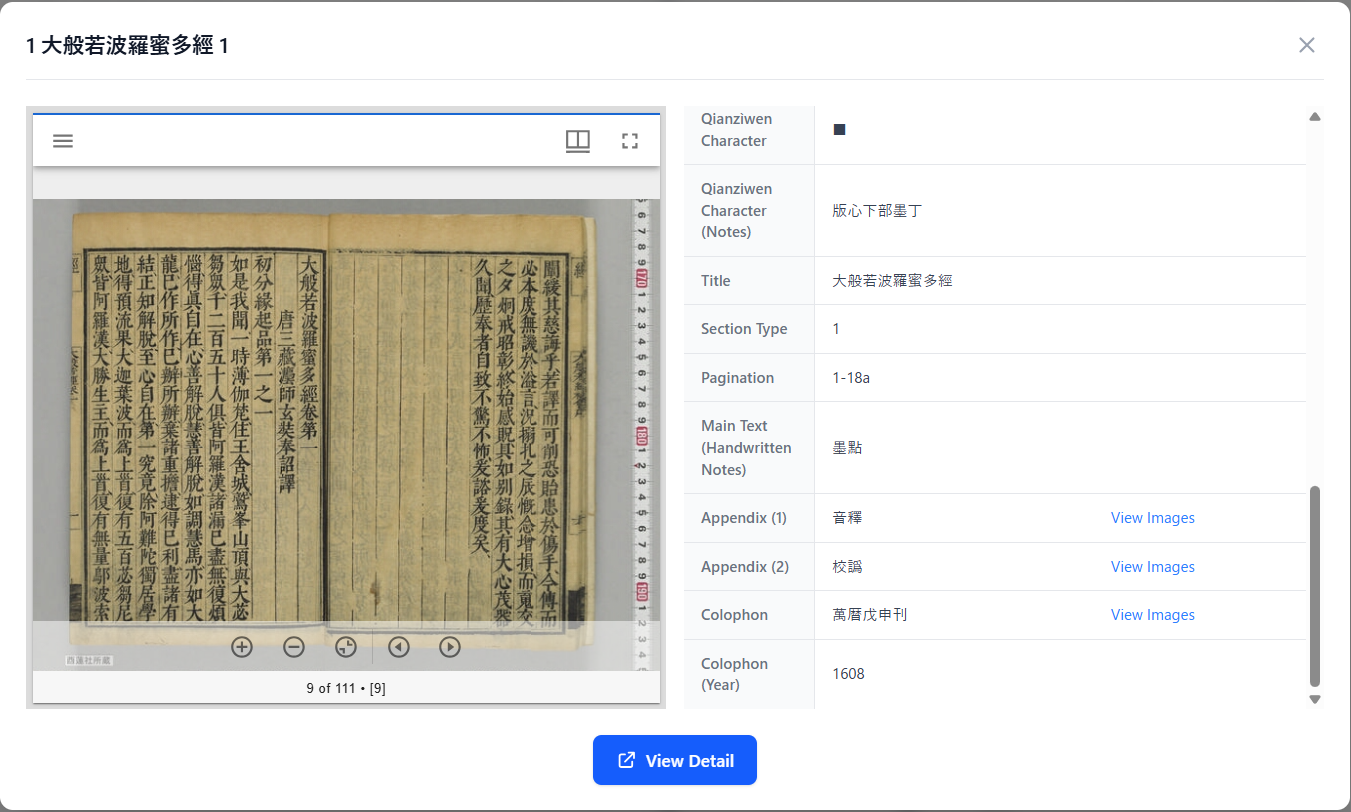
To view more detailed information or images, click “Details” on the right side of the search results. The image will be displayed on the left, and detailed bibliographical information on the right.

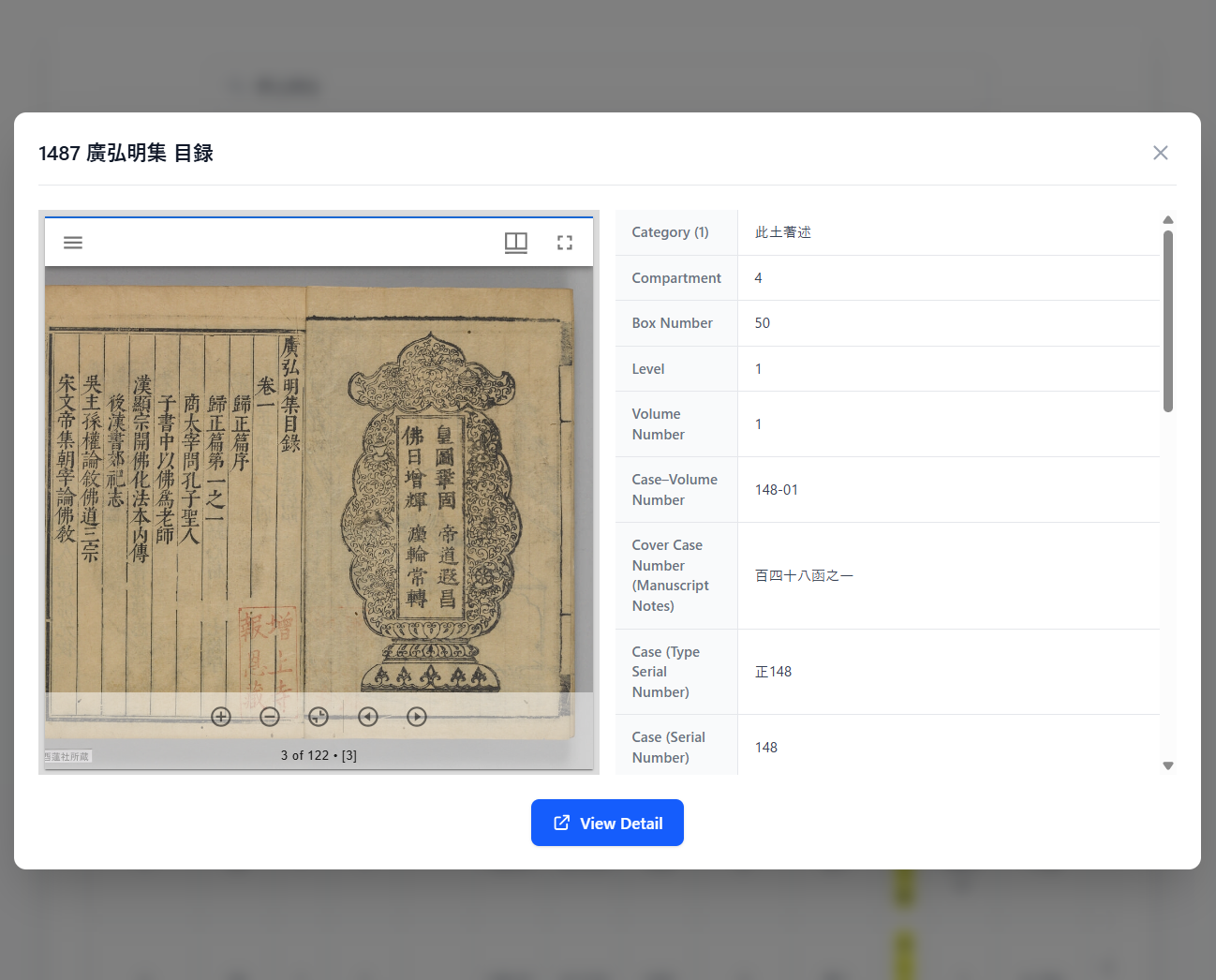
By clicking “View Detail,” the bibliographical record will open in a separate window.
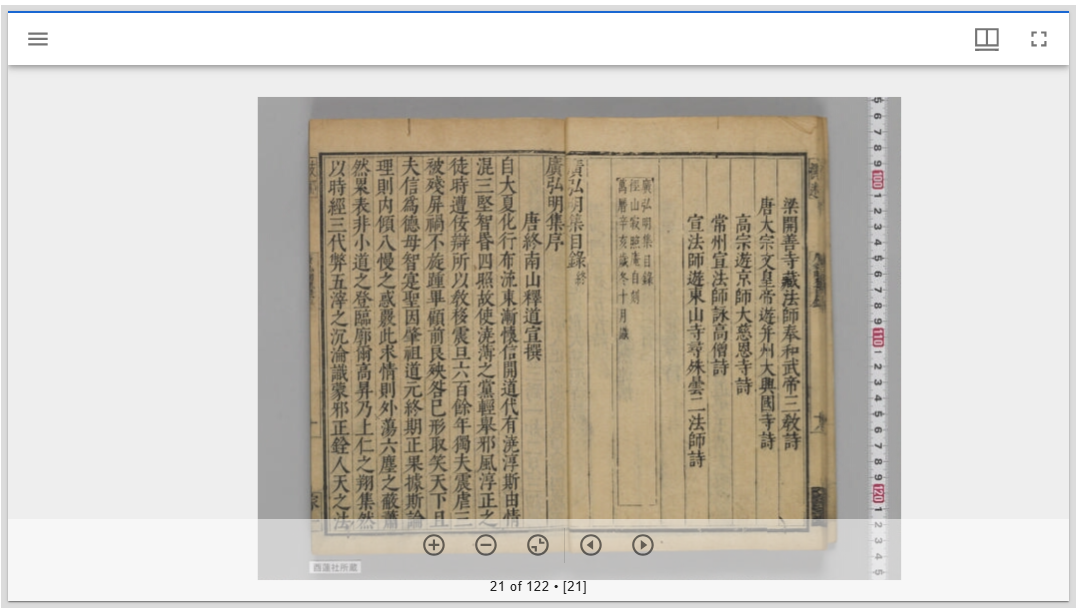
To view images corresponding to specific entries such as “Colophon” or “Illustrations,” scroll through the image pages to locate the desired section.
When the label “View Images” appears to the right of an item, you can click it to open the corresponding page directly.
We are currently working on constructing text data using OCR (Optical Character Recognition)*.
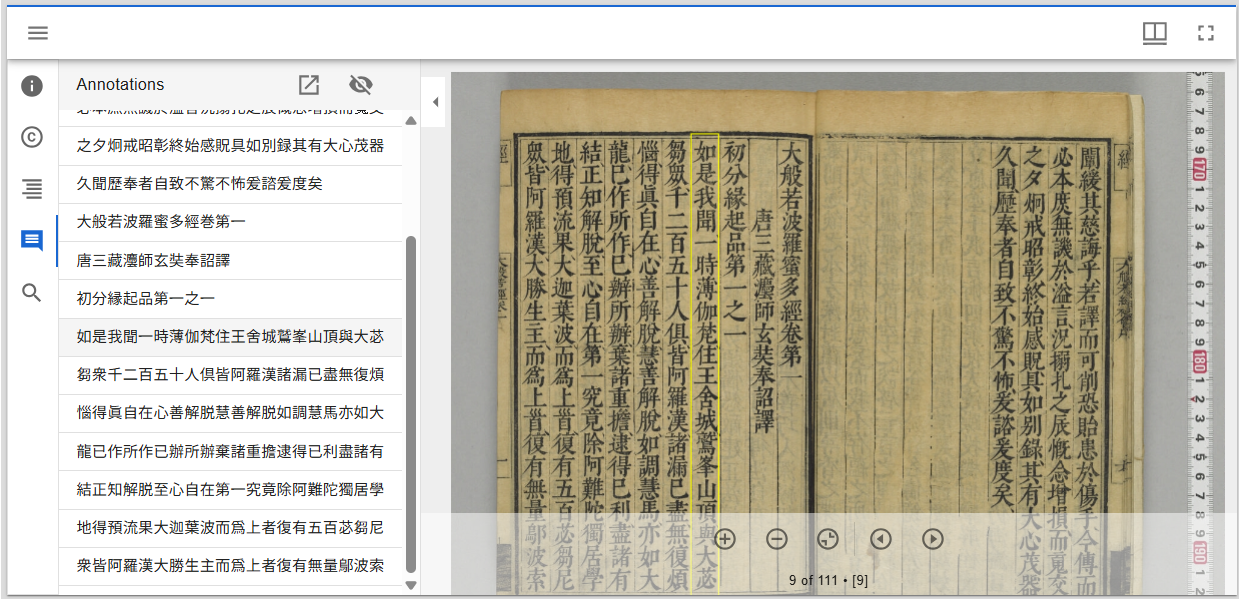
We publish TEI (Text Encoding Initiative)–compliant texts generated from OCR results created with the NDL Koten-seki OCR-Lite system. The texts are made available using the DTS (Distributed Text Services) API to ensure FAIR data publication—Findable, Accessible, Interoperable, and Reusable. (See “Dataset” for details.)
- The following cases and volumes have been proofread:
• 001-01 to 012-08, 177-03 to 177-05
In carrying out the proofreading, we made use of the textual data provided by the SAT Taishō Tripiṭaka Text Database.
We will continue proofreading the remaining cases and volumes, and any volumes for which proofreading has been completed will be posted in the “News” section.
End
Description of Fields
The following sections explain the data fields used in this database.
[Search by Case and Volume]
| Field | Description | Example |
| List of Cases | Displays a list of cases (chitsu) in the Yūren-ja collection. Clicking a case shows all volumes contained in that case on the right (“List of Volumes”). Clicking again cancels the selection. Multiple cases can be selected at once. | 001, 002, 003 … 331, 332, 333 |
| List of Volumes | Displays the list of volumes in the Yūren-ja collection. When a case is selected from the “List of Cases,” the volumes contained in that case are shown here. Deselecting a case hides the corresponding list of volumes. | 001-01, 001-02, 001-03~ 333-02, 333-03, 333-04 |
| View Images | Appears when images are available for the selected volumes listed in the “List of Volumes.” Click the purple “View Images” button to the right of “Case 000” to display the contents of all volumes contained in that case. Then click the desired part to open the images. Click the blue “View Images” button to the right of “000-00” to open images of that specific volume. |
|
| View Bibliography | While a case is selected, click a volume number (“000-00”) in the “List of Volumes” to select the desired item. Then click “View Bibliography” to display the “Detailed Catalog” entries contained in that volume. |  |
| Reset | Click to cancel the “View Bibliography” selection. |  |


[Title Catalog]
| Field | Description | Example |
| Category | Indicates the Buddhist Canonical Categories. | 經 大乘經 般若部 經 小乘經 阿含部 律 大乘律 論 小乘論 大明續入藏所集 續藏 又續藏 |
| Case–Volume Number | Expressed by combining the serial number of the case and the order of the volume within the case (e.g., “113-07”). Cases are numbered sequentially, but volumes may not be consecutive because some are divided into upper and lower fascicles (e.g., (1), (2)) or missing. For texts spanning multiple cases, the first and last are connected with “~”; missing volumes are marked as “(闕).” | 113-07 114-01~117-10 153-10(闕) 176-05~176-06 (176-06 闕)) |
| Taishō Tripiṭaka Number | A number prefixed with “U,” based on the serial numbers assigned in the Daming Sanzang Shengjiao Beizang Mulu (Shōwa Hōbō Sōmokuroku, vol. 2). Because this database includes separately listed texts, mixed ordering, and duplicate holdings, this number does not function as an individual identifier nor as a continuous sequence. | U1243 U1613(重複) U續123 U又續022 U---- |
| Serial Number | The continuous number assigned to each scripture in the Yūren-ja collection, regardless of Main Collection, Supplement, or Second Supplement (0001–2084). | 1 1256 2084 |
| Title & Fascicle | Displays the basic information in the form “Title + Number of Fascicles + Supplement.” | 佛説八吉祥經1卷 佛説盂蘭盆經1卷坿校譌音釋 佛説得道梯隥錫杖經1卷坿持錫杖法1卷 |
| Translator/Author | Recorded in the format “Dynasty + Name + Authorship Type.” When multiple translators have different roles, they are separated by “,”; if their roles are the same, they are joined by “・”. Unknown elements are represented by “□,” and completely unknown names by “闕名.” | 唐釋玄奘譯 天親菩薩造, 北魏菩提留支譯 北魏菩提留支・曇林等譯 |
| Format | Describes the layout characteristics of the printed text. If the format matches the Jiaxing edition’s standard type (e.g., 雙邊 有界10行20字), only “定型” is recorded. Variant Editions are described in detail. | 定型 單邊 有界8行17字 單白魚尾白口 句點 |
| Colophon | If the colophon or inscription at the end records the publication year, it is noted as “Era Name + Year Printed” (元号+幾年刊). “Unknown Year Printed” (不明年刊) indicates no date, and unreadable digits are replaced with “□.” | 萬暦26年刊 萬暦44・45年, 天啓6年刊 不明年刊 □□5年刊 □□□□刊 |
| Remarks | Records major additional notes such as damage, missing pages, or recut inscription. | 卷上1-11丁大破 卷十15丁以下闕 卷一15丁, 丁巳恒瑞重刊 |
| Dimensions | Indicates the measurements (in cm) of the right and upper sides of the frame at the opening of the first fascicle of each scripture, along with the measurement point. | 22.7×14.9㎝(卷一1a) |
| Dimensions (Notes) | If measurements were taken from a place other than the opening of the first fascicle due to reasons other than damage (e.g., multiple works in one fascicle, appendix), they are noted here. | 華嚴原人論23.1×14.9cm(5a) 卷四23.0×14.9cm(1a) 二筆21.4×14.1cm(1a), 三筆21.6×14.0cm(1a) |
| Taishō Tripiṭaka Inclusion Status | When the "Yūren-ja copy" (増上寺報恩蔵蔵本) or a "Ming edition" (明本) was used in the Taishō Tripiṭaka, the corresponding Taishō Tripiṭaka number and base/collation text are shown in the format “T number + Base/Collation + (Text).” Clicking this field links directly to the relevant record in the Taishō Tripiṭaka Base and Collation Texts Database. | T0001校本(明本) T0874底本(増上寺報恩蔵蔵本) T1909校本(増上寺報恩蔵蔵本) |
[Detailed Catalog]
| Field | Description | Example |
| Category (1) | Indicates the first-level category. Includes: "Sūtra" (經), "Vinaya" (律), "Śāstra" (論), "Xitu Xiansheng zhuanji" (西土賢聖撰集), "Citu zhuanshu" (此土撰述), "Daming Xuruzang Zhuji" (大明續入藏諸集), "Beizang Qian Nanzang Hanhao Fu" (北藏缺南藏函號附), "Supplement" (續藏), and "Second Supplement" (又續藏). | (No example) |
| Category (2) | Indicates the second-level category. Includes "Mahāyāna Sūtras" (大乘經), "Hīnayāna Sūtras" (小乘經), "Song–Yuan Ruzang Zhudaxiaochengjing" (宋元入藏諸大小乘經), "Song–Yuan Ruzang Zhudaxiaochengjing Zhi Yu" (宋元入藏諸大小乘經之餘), "Mahāyāna Vinaya" (大乘律), "Hīnayāna Vinaya" (小乘律), "Mahāyāna Śāstra" (大乘論), "Hīnayāna Śāstra" (小乘論), and "Song–Yuan Xuruzang Zhulun" (宋元續入藏緒論). Some items have no second-level category. | (No example) |
| Category (3) | Indicates the third-level category, used only when the second-level category is "Mahāyāna Sūtras" (大乘經) or "Hīnayāna Sūtras" (小乘經). | (No example) |
| Compartment | Indicates the compartment (1–7) within the Yūren-ja collection. | 3 |
| Box Number | Indicates the serial number of the storage box (01–111). | 15 |
| Level | Indicates the internal shelf level (1–3) within the box where the item is stored. | 1 |
| Volume Number | Indicates the volume number (01–16) within each shelf. | 11 |
| Missing | Indicates that a volume is missing from the Yūren-ja collection. “闕” = absent only in Yūren-ja collection, “原闕” = absent in all known editions, “原闕か” = uncertain case of the latter. | 闕 原闕 原闕か |
| Case–Volume Number | Shows the case and volume number corresponding to each record. Based primarily on “Cover Case Number (Manuscript Notes)”; if absent, inferred from “Cover (Notes)”, “Case (Serial Number)”, and “Level.” Expressed as “Case–Volume”; when a volume is divided into two parts, they are shown as (1) and (2). | 001-01 333-04 054-05(1) 054-05(2) |
| Cover Case Number (Manuscript Notes) | Records the case–volume notation written on the cover. | 壹函之一 |
| Cover (Notes) | Notes any handwritten annotations on the front or back cover, spine, or bottom edge. | 「四十三函」と朱書す 裏表紙闕 |
| Case (Type Serial Number) | Indicates the case serial number classified by parts: Main Collection (001–210), Supplement (01–90), and Second Supplement (01–33). | 正001 續01 又續01 |
| Case (Serial Number) | Overall serial number of the case (001–333), regardless of classification. | 326 |
| Taishō Tripiṭaka Number | A number prefixed with “U”, based on the serial numbers assigned in the Daming Sanzang Shengjiao Beizang Mulu (Shōwa Hōbō Sōmokuroku, vol. 2). Because this database includes separately listed texts, mixed ordering, and duplicate holdings, this number does not function as an individual identifier nor as a continuous sequence. | U1243 U1613(重複) U續123 U又續022 U---- |
| Serial Number | The continuous number assigned to each scripture in the Yūren-ja collection, regardless of Main Collection, Supplement, or Second Supplement (0001–2084). | 1 1256 2084 |
| SubNumber | Indicates the record number within the same Serial No. (1–618). | 1 618 |
| Dimension (1) | Right side measurement (cm) of the printed frame in the first fascicle’s opening page. | 22.7 |
| Dimension (2) | Upper side measurement (cm) of the printed frame in the first fascicle’s opening page. | 14.9 |
| Measurement Point (1) | Indicates the fascicle from which dimensions were measured. | 卷一 |
| Measurement Point (2) | Indicates the folio and side (a/b) where the measurement was taken. | 1a |
| Title Slip | This field records the presence and type of the title label. The value “有” (Present) indicates a printed label. The value “書貼(青)” (Handwritten label (blue)) is used for handwritten labels on blue paper of the same design. Damage, if any, is indicated in parentheses “( )”. | 有 書貼(青) 有(上半闕) |
| Title Slip (Notes) | Notes related to title labels, such as detached, misplaced, or annotated labels, and pasted lists of contents. | 刷題簽ハガレ 題簽中部に墨筆「一之十」 収録経典リストあり |
| Qianziwen Character | Form and placement: In the Jiaxing edition, the fascicle-order mark typically consists of a "Qianziwen" (千字文) character combined with a numeral (1–11). This mark is usually printed at the bottom of the inner margin, but may also appear at the beginning or end of the fascicle. Priority of sources: Priority is given to the Qianziwen printed in the inner margin. If the Qianziwen is missing or illegible, the Qianziwen on the title label or at the beginning/end of the fascicle is used instead. If the inner-margin Qianziwen is unengraved or damaged but the title label carries the Qianziwen, that Qianziwen applies to all fascicles of the volume. Rules for Recording Qianziwen:
Rare cases also include combinations such as “Nan + Qianziwen (南+千字文)/Bei + Qianziwen (北+千字文) .” | 天1 天1/ /天1 天/1 ■ × 南履/北臨 |
| Qianziwen Character Source | Shows the source from which the "Qianziwen" (千字文) was taken (inner margin, title label, or beginning/end of the fascicle). | 版心千字文「臨九」 版心下部墨丁 題簽千字文「履」 |
| Title | Titles are usually identical for items with the same Serial Number, though minor exceptions exist—for example, Serial Number 1668 includes both Huangbo-shan Duanji Chanshi Chuanxin Fayao (黄檗山斷際禪師傳心法要) and Huangbo-shan Duanji Chanshi Wanlinglu (黄檗山斷際禪師宛陵録). | 佛説盂蘭盆經 佛説得道梯隥錫杖經 |
| Title (Notes) | Records notes related to the title field, including the basis for the recorded title when applicable, as well as any title information found elsewhere in the fascicle (e.g., title label or inner-margin title). | 版心題「華嚴經普賢行願品」 卷頭書名「廣弘明集歸正篇序」 題簽題「妙法蓮華經玄籤」, 版心題「妙玄籤」 卷頭書名なし 卷によって卷頭書名異なる. 目次題による |
| Section Type | Records the fascicle number, preface, postface, and other sectional components, excluding appendices such as "phonetic/semantic annotations" (音釋) and "textual variant notes" (校訛). “卷第一” is recorded as “1”, “卷第一之一” as “1(1)”, and “卷第一之上” as “1(上)”. | 1 上 1(1) ○○序 □□跋 |
| Identification Basis for Section Type | Records the basis used when the Section Type entry was taken from a part of the fascicle other than the beginning. | 「目録」は版心による 「後序」は版心による |
| Section Type (Notes) | Records special notes related to the Section Type entry, such as missing fascicles, reversals in fascicle order, or cases where the fascicle number carved in the running title differs. | 卷一闕 卷上下顛倒 題簽卷次「一之五」 版心「卷四」 卷頭卷次「三十二」之「二」字闕落 |
| Section Type (Author/Translator) | Records the translator/author for each section. | 唐釋宗密撰集 卷によって編者異なる |
| Pagination | The first and last folio numbers are recorded with a hyphen (e.g., “1–10a”). If the first folio begins on the recto, it is written simply as “1”; if it begins on the verso, it is written as “1b”. The final folio is always marked with “a” (recto) or “b” (verso). For items consisting of only one folio, the notation “1a”, “1b”, or “1ab” is used. | 1a 3b 1–22b 3b–5a |
| Pagination (Notes) | Notes any damaged or missing folios, misordered folios, duplicated folios (e.g., a second “folio 30” noted as “又三十”), or manuscript-supplied folios added to replace missing pages. | 21丁闕 1-15丁破損大 20・21丁顛倒 27丁補鈔 14丁丁附「又十三」 |
| Main Text (Printed Notes) | Records noteworthy features found within the main text, limited to those that are printed. | U1224卷下題下に「略明般若末/後一頌讚述附」とあり 21丁本文にまま墨丁あり 23aに圖あり 26b末題不鮮明 |
| Main Text (Handwritten Notes) | Records noteworthy features found within the main text that result from handwritten additions. | 墨點 16bに朱筆書入あり 注記・校記を記した紙片の貼附多數 |
| Frame (Variant Editions Only) | Recorded in the first fascicle where the "frame" (匡郭) differs from the Jiaxing edition’s standard "double-border format" (雙邊). Cases in which the frame is double-bordered but still deviates from the Jiaxing standard are also noted. | 單邊 左右雙邊 波形邊 |
| Border Lines / Layout (Variant Editions Only) | Recorded in the first fascicle where the Border Lines or line-and-character format differ from the Jiaxing edition’s standard layout (有界10行20字). | 無界10行20字 無界10行21字 有界8行17字 有界11行21字 |
| Inner Margin (Variant Editions Only) | Recorded in the first fascicle where the Inner Margin—comprising the fishtail and the Upper and Lower Margins—differs from the Jiaxing edition’s standard format (無魚尾白口). | 單魚尾上白口下白口 單白魚尾白口 雙魚尾小黒口 無魚尾線黒口 |
| Inner Margin (Recut Inscription, etc.) | Recorded when a Recut Inscription or the name of a "donor who contributed to the carving" (助刻者) is printed in the Inner Margin. | 3・4丁版心中下間「康煕九年重刊」 この經, 版心中下間に「信士汪廣刻」等助刻者名あり |
| Inner Margin (Notes) | Notes additional information on the inner margin not included in “Inner Margin (Recarving Note, etc.)”. | 版心上部墨丁 版心上部「善信/撰述」 1a版心下部に刻工名あり |
| Reading Marks/Marginal Annotations | Recorded when Reading Marks, the presence or type of Marginal Annotations—including "headnotes written above the main text" (首書) or "schematic section diagrams" (科文)—or other layout-related features appear in the text block. Although the Jiaxing edition’s standard format contains no Reading Marks, any non-standard layout features are noted even when the text is unmarked. | 句點, 傍點 句四聲點 首書 科文 |
| Appendix (1) | Recorded when an appendix containing "textual variant notes" (校譌) or "phonetic/semantic annotations" (音釋) is present at the end of the fascicle. | 校譌 |
| Appendix (2) | Recorded when a second appendix of the same type—"textual variant notes" (校訛) or "phonetic/semantic annotations" (音釋)—is present. | 音釋 |
| Appendix (3) | Recorded when a third appendix of the same type is present. | 〈音/釋〉 |
| Appendix (4) | Recorded when a fourth appendix of the same type is present. | 存疑 |
| Appendix (Notes) | Recorded when the appendix of "textual variant notes" (校譌) or "phonetic/semantic annotations" (音釋) consists only of a title, or when it contains an "uncarved square" (墨丁). | 音釋題のみ 音釋墨丁多し 校譌注文墨丁 |
| Colophon | When a colophon or inscription appears at the end of the fascicle, the publication year is recorded in the format “Era Name + Year Printed” (元号+幾年刊). If the original text gives the year in the “Sexagenary Cycle” (干支), it is recorded in that form. When no publication year is given, it is recorded as “Unknown Year Printed” (不明年刊), and when part of the date is unclear due to faint printing or other damage, the missing portion is marked with “□”. Although colophons in the Jiaxing edition normally include a frame, cases without a frame are indicated by adding “No Frame” (無枠) at the end. | 萬暦己丑刊 乙巳刊(無枠) □□辛丑刊 □□□□刊 不明年刊 |
| Colophon (Year) | Indicates the Western calendar year corresponding to the colophon date. | 1559 |
| Colophon (Noes) | Recorded when the colophon at the end of the fascicle is faint or unclear, or when it contains misprints, uncarved squares (墨丁), or damaged portions; when notes after the colophon record the number of characters carved (刻字數) or costs related to publication; or when names of donors involved in the carving (助刻芳名) or plate-ownership notices (e.g., “… 蔵版/蔵板”) appear at the end of the fascicle. | 不鮮明 墨丁あり 一部破損 刊記後に刻字數・出版費の注記あり 助刻芳名 末「板存嘉興府楞/嚴寺經坊流通」 |
| Uncarved Square at End | Recorded when uncarved squares (墨丁) appear at the end of the fascicle. | 墨丁 |
| Uncarved Square at End (Location) | Indicates the position of uncarved squares (墨丁). | 音釋前 校譌後 卷末 刊記前 刊記後 |
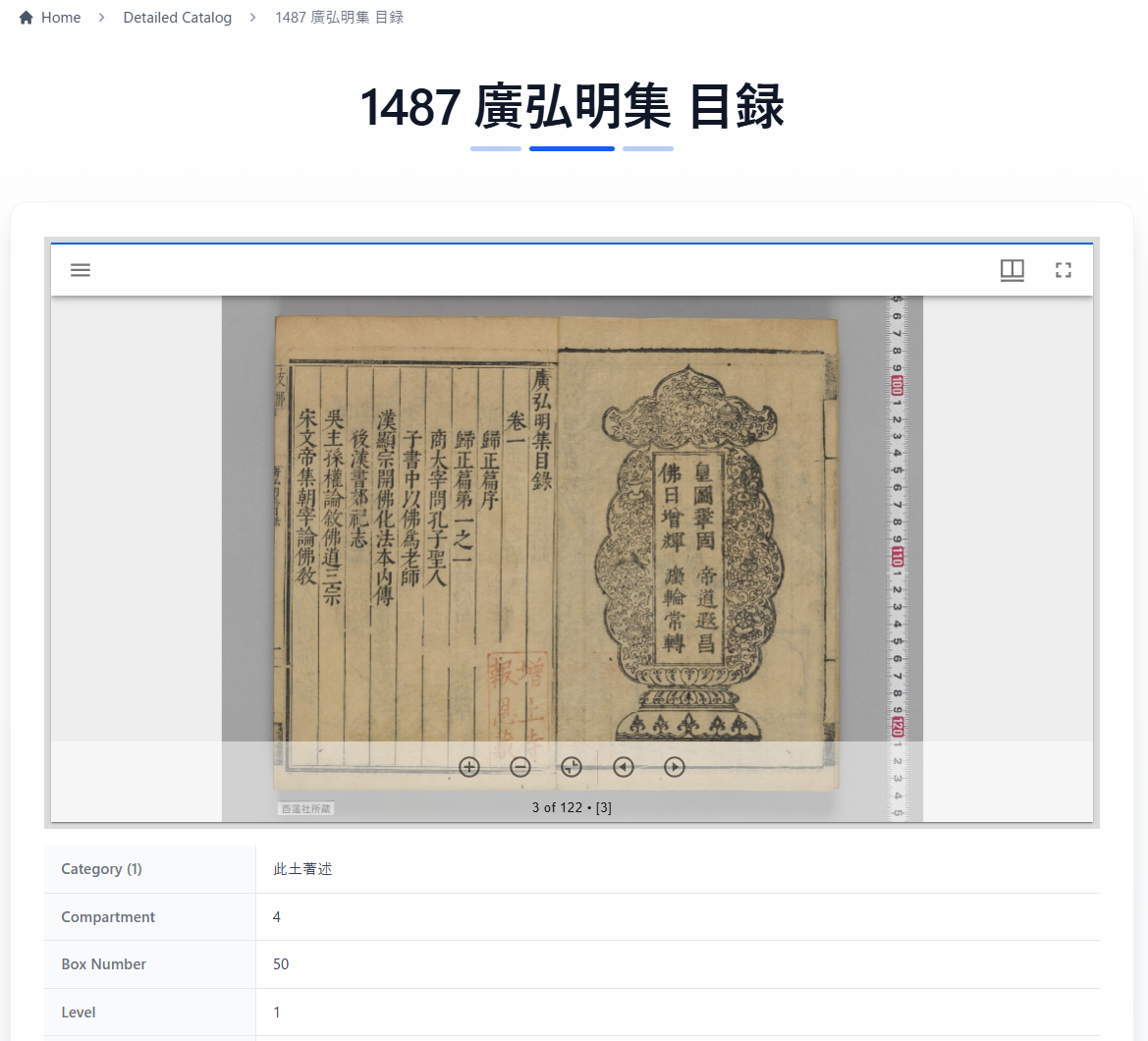
| Illustrations | Recorded when an illustration (Buddhist iconographic image) appears at the beginning or end of a fascicle. Illustrations are classified by motif, and similar motifs are distinguished by numbers (①, ②, ③, ④, etc.). Details are described in the fields “Illustration (Design),” “Illustration (Verso),” and “Illustration (Notes).” | 釋迦二比丘像①~⑤ 釋迦三尊像①~② 淨土變相圖 比丘童子像①~③ 韋駄天像①~④ 釋迦説法圖①~② 維摩詰經相 釋迦像①~② 釋迦比丘像 釋迦三比丘像①~② 阿難餓鬼像 佛母准提像etc |
| Illustration (Location) | Recorded the location of the illustration. | 卷首表 U0142維摩詰所説經卷上卷首表裏 |
| Illustration (Design) | Recorded the characteristic features of the illustration’s design. | 釋迦は蓮華座に坐す 釋迦は蓮華座に坐す. 右比丘は胡麻髭、左比丘は剃髪 童子は剃髪せず 丁表・丁裏ともに釋迦, 文殊, 阿難, 舍利弗, 十方菩薩等を描く |
| Illustration (Verso) | Recorded when verses, prefaces, or other text are printed on the verso of the illustration. | 丁裏に偈「皇圖鞏固 帝道遐昌/佛日增輝 灋輪常轉」あり(蓮牌木記) 丁裏に序等あり 丁裏に贊あり |
| Illustration (Notes) | Recorded additional information related to the illustration not included in “Illustration (Location),” “Illustration (Design),” or “Illustration (Verso).” | 版心下部白口 版心下部墨丁 丁表の版心下部に「般若堂刻」、丁裏に施刻者「〈荊溪/襄楚〉釋〈雲素/㣲言〉捐貲敬鐫」あり |
| Book Seal | Recorded ownership seals stamped on the first or last folio of each fascicle. When the same seal appears twice on a single folio, it is noted as “2 seals” (2ヶ). | 「增上寺/報恩藏」印 「雅山/之章」印(2ヶ) 「猶龍窟」 「破書/顔圖」印 |
| Book Seal (Notes) | Recorded special notes related to ownership seals, such as inverted impressions. Chinese seals are also noted, including those that may belong to engravers or other individuals. | 「雅山/之章」印横轉 34丁補鈔に「雅山/之章」印あり 9a「陶印」墨印 30b「靖元」墨印 13b「肇聖」墨印 「蔣惟/華記」茶印 |